Modern Glass Partitions: Commercial & Residential Installation in New Jersey

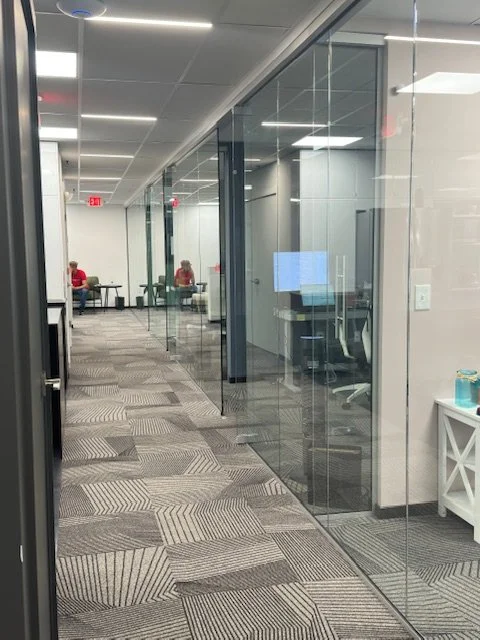
Most offices in North Jersey choose glass partitions because they divide workspaces without blocking natural light. At Delta Glass NJ, we install these systems every week. We see a lot of different setups, but the core materials and installation methods stay mostly the same.

This guide breaks down how we build glass partitions, the options available for your office or home, and the common challenges we run into on real job sites across Hudson, Bergen, Essex, and Passaic counties.

How Glass Partitions Are Built

The foundation of a solid glass partition is the channel system. We typically use extruded aluminum base and header channels. The glass panels sit inside these channels, secured with setting blocks and structural silicone or rubber gaskets.

For standard office heights, 1/2-inch tempered glass is the go-to choice. It stays rigid on spans up to about 10 feet without needing a heavy top header. If the ceiling is higher, or if you need extra sound control for a conference room, we might switch to 9/16-inch laminated glass or use a framed system that provides more structural support. The glass is heavy—a 1/2-inch thick panel weighs about 6.5 pounds per square foot—so the framing and anchors must be solid.

Types of Glass Partitions

We install three main types of glass partitions, depending on the office layout, building structure, and your specific needs.

Frameless Glass Systems

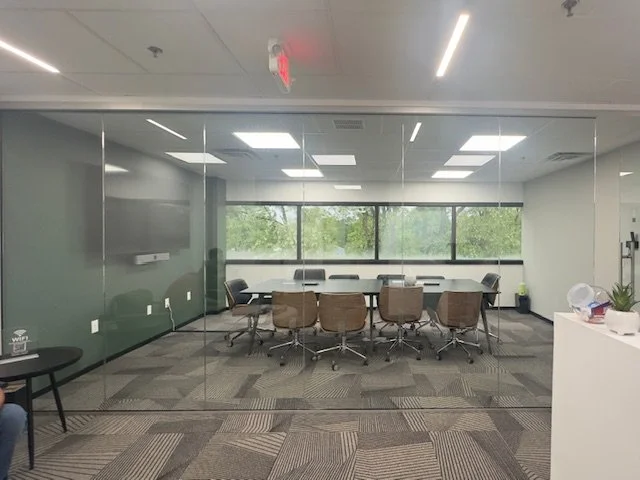
Frameless glass walls look cleaner because there are no vertical metal posts between the glass panels. The panels are joined edge-to-edge using clear silicone or polycarbonate H-channels. This is the most common request we get for modern conference rooms and executive offices. Frameless systems are usually anchored with aluminum U-channels at the floor and ceiling.

Framed Glass Systems

Frameless glass walls look cleaner, but framed systems sometimes make more sense in large office layouts because they allow longer spans without needing structural support from the ceiling. The aluminum framing around each panel adds rigidity. This is especially useful in spaces with drop ceilings that cannot carry the weight of a heavy glass header.

Sliding Glass Systems

When floor space is tight, sliding glass doors are a practical option. We install these using a top-hung track system, which means the weight of the door is carried entirely by the header. The bottom of the door usually just has a small floor guide to keep it from swinging. This setup requires a solid structural header to support the track.

Real Installation Challenges

Installing glass isn't just about standing up heavy panels. The building itself dictates how the job goes. Here are the most common challenges we face in North Jersey.

Uneven Floors

The biggest challenge we usually see in older office buildings in Jersey City and Hoboken is uneven floors. The concrete slab is rarely perfectly level. When this happens, we have to shim the base channel to make sure it is perfectly flat before setting the glass. If the base isn't level, the glass panels won't line up correctly at the seams, and the doors won't swing properly.

Ceiling Support

If a partition runs all the way to the ceiling, we need to know what we are anchoring into. Anchoring into a concrete deck or structural steel is ideal. However, if the office has a suspended acoustic tile ceiling, we often have to install additional blocking above the grid to support the top channel safely. We cannot hang a heavy glass door from a standard drop ceiling grid.

Sound Control

One of the first questions office managers ask is whether glass partitions block sound. Standard 1/2-inch tempered glass does not fully soundproof a room. It dampens normal conversation, but if you need privacy for an HR office or a boardroom, standard glass won't cut it. To improve privacy, we usually recommend switching to laminated glass, which has a plastic interlayer that absorbs sound waves. We also add drop seals on the doors and acoustic framing to close the gaps.

Cost Factors for Glass Partitions

Several factors change the price of a glass partition project.

The thickness and type of glass are the biggest drivers. Standard 3/8-inch or 1/2-inch clear tempered glass is the baseline. Upgrading to low-iron glass (like Starphire, which removes the green tint on the edges) or laminated glass increases the material cost.

Hardware also matters. Standard brushed aluminum U-channels are cost-effective. Upgrading to matte black patch fittings, hydraulic hinges, or ladder pulls will add to the final price.

Finally, the site conditions play a role. If we have to spend a half-day leveling a floor in an older Newark building or adding ceiling blocking above a drop ceiling, labor costs go up.

Real Projects in New Jersey

A recent installation we completed in Englewood Cliffs included a frameless conference room with 1/2-inch Starphire glass and matte black patch fittings. The client wanted a seamless look, so we recessed the U-channels into the drywall ceiling and the flooring. This took extra coordination with the general contractor during the framing stage, but the final result was a glass wall that looked like it was growing straight out of the floor.

In another project in Newark, we installed a framed system with sliding doors for a row of private offices. The building had high open-plenum ceilings, so we couldn't anchor to the roof deck. The framed system allowed us to build freestanding glass pods that supported their own weight.

The Installation Process

Customers like understanding how the job works before we show up. Here is what a typical commercial project looks like:

1.Site Visit and Measurements: We come to the office to check the floor level, locate structural supports, and take exact laser measurements. We cannot order the glass until the finished floors and walls are in place.

2.Glass Fabrication: The glass is cut to size, the edges are polished, and any holes for door hinges or ladder pulls are drilled. Then the glass goes into the tempering oven. This process usually takes about two weeks.

3.Hardware Preparation: We cut the aluminum channels to length and prep the door hardware in our shop.

4.Installation: We secure the base and header channels, set the glass panels, and install the doors. Installation usually takes one to two days depending on the size of the project.

5.Final Adjustments: We adjust the door hinges so they close smoothly, seal the panel joints with silicone, and clean the glass.

Service Area

Delta Glass NJ provides commercial and residential glass partition installation across North and Central New Jersey. We regularly work in Hudson, Essex, Bergen, and Passaic counties, including major hubs like Jersey City, Hoboken, Newark, and Englewood Cliffs. We work directly with business owners, office managers, homeowners, and general contractors.

Ready to Start Your Project?

Call Delta Glass NJ at (201) 214-3779 for a consultation, email us at deltaglassestimates@gmail.com, or **request a detailed quote online**.

We serve businesses throughout **Bergen County, Hudson County, Passaic County, and the greater North Jersey region.**

Factors Affecting Cost

  • Glass Quality and Thickness: Premium laminated or acoustic glass costs more but offers better durability and performance.

  • Customization and Design Complexity: Decorative etching, curved panels, and integrated branding elements add to the cost.

  • Installation Complexity: Non-standard ceiling heights, uneven flooring, or the need for acoustic seals can affect labor and material expenses.

  • Geographical Location: Labor and material costs vary by region.

Design Inspiration

Whether your project is commercial or residential, glass partition systems provide boundless design opportunities. From open-plan offices to cozy reading nooks, here are some inspiring examples.

Modern Office Examples

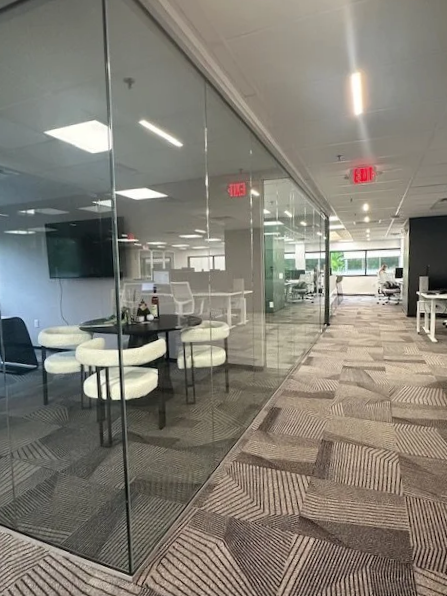
  • Collaborative Zones: Use frameless office glass partitions to create transparent meeting pods surrounded by open desk areas.

  • Private Offices: Integrate acoustic glass walls to provide executives with quiet, private spaces while maintaining a connection to the broader team.

  • Branding Opportunities: Custom-printed frosted glass with company logos or mission statements makes a memorable first impression on clients.

Residential Applications

  • Home Offices: Convert a corner of your living room into a functional office space with frameless interior glass walls, ensuring separation without isolation.

  • Kitchen and Dining Separation: Sliding glass room dividers allow you to close off the kitchen during cooking but open it up for social gatherings.

  • Bathroom Partitions: Frosted or tinted glass can separate showers from the main bathroom area, maintaining privacy while letting light in.

Creative Uses in Different Settings

  • Retail Environments: Glass partitions can highlight products, maintain sightlines, and create subtle divisions between product categories.

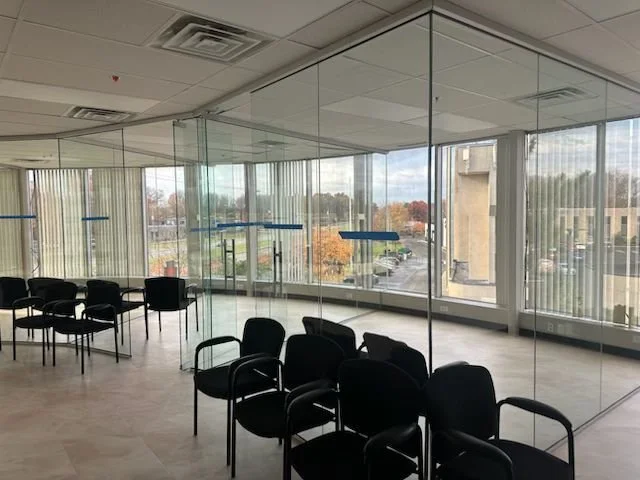
  • Healthcare Facilities: Easy-to-clean glass walls offer hygiene benefits, aiding patient privacy and light transmission in clinics and medical offices.

  • Hospitality and Restaurants: Decorative glass partitions can define dining zones while preserving a sense of openness and luxury.

(Image Alt Text: "Interior glass walls creating a stylish home office space")

FAQ: Glass Partitions

Are glass partitions suitable for home use?

Absolutely. Glass partitions for homes bring natural light into previously dark corners, create open-concept living spaces, and provide stylish solutions for noise control, privacy, and flexible layouts.

How do acoustic glass partitions differ from regular glass partitions?

Acoustic glass partitions are engineered with layers of laminated glass and specialized seals to reduce sound transmission, making them ideal for confidential conversations or quiet focus areas.

What’s the maintenance cost of glass partition systems?

Maintenance costs are generally low. Regular cleaning with a mild glass cleaner keeps partitions pristine. Hardware, such as sliding tracks, may need occasional lubrication. Most glass partition systems are designed for longevity, minimizing long-term expenses.

How do I ensure privacy with frameless glass walls?

Consider using frosted films, decorative patterns, or curtains and blinds. Strategic furniture placement and partially opaque surfaces can also enhance privacy without blocking natural light.

Are there sustainable or eco-friendly glass partition options?

Yes. Many interior glass walls are made from recyclable materials. By improving natural light penetration, they reduce energy consumption, and their long lifespan decreases environmental impact over time.

How long does the installation process take?

The timeframe varies based on the project’s complexity and size. Simple frameless glass walls in a small office might be installed in around 2 weeks, while larger, customized installations could take from 3 to 4 weeks

What’s the current market trend for office glass partitions?

Trends include increased demand for acoustic solutions, biophilic designs incorporating greenery, and seamless integration with smart controls (e.g., switchable privacy glass). The market also leans toward more sustainable and recyclable materials.

(Image Alt Text: "FAQ about glass partitions illustrated with various office glass partitions")

Expert Insight and Statistics

“Glass partitions not only transform the aesthetics of an office but also significantly influence employee engagement,” says interior designer Andrea Walters, AIA-certified. “Our clients report a noticeable increase in productivity and employee satisfaction when transitioning from opaque walls to more transparent, light-filled workspaces.”

According to a survey by the International Facility Management Association (IFMA), over 60% of facility managers plan to integrate or expand glass partition systems within the next three years. This aligns with global workspace trends prioritizing flexibility, acoustics, and employee well-being.

Actionable Maintenance Tips

  1. Regular Dusting: Wipe down glass surfaces weekly with a microfiber cloth to prevent dust buildup.

  2. Spot Cleaning: Address fingerprints, coffee splatters, or other marks immediately with a mild glass cleaner.

  3. Track Maintenance: For sliding glass partition systems, vacuum tracks to remove debris and apply silicone-based lubricant once every few months.

  4. Protective Films: Consider anti-shatter films or protective coatings in high-traffic areas to prolong glass life and ensure safety.

Current Market Prices and Trends

Recent market reports suggest a growing preference for frameless glass walls due to their clean aesthetics. Acoustic solutions are also on the rise, responding to open-plan office criticisms over noise levels. Modular, easy-to-install systems that allow for future reconfiguration are particularly popular, enabling businesses and homeowners to adapt their spaces over time.

  • Cost Stability: Prices have remained relatively stable, with fluctuations often driven by regional labor costs and shipping rates of glass materials.

  • Technological Integration: Innovations such as switchable smart glass allow for real-time adjustments in transparency, granting occupants greater control over their environment. Expect to pay a premium for such features.

Conclusion

Glass partitions represent a powerful blend of functionality, sustainability, and modern aesthetics. From frameless office glass partitions that encourage transparency and collaboration to acoustic glass partition systems that ensure privacy and quiet, the possibilities are vast. By capitalizing on natural light, enhancing space efficiency, and delivering a high-end look, glass partitions cater to evolving workplace demands and contemporary residential lifestyles.

Whether you’re investing in a new office layout, creating a stylish home office, or simply looking to revamp your space, these versatile interior glass walls are poised to stand the test of time. With proper installation, maintenance, and attention to cost, your glass partitions will continue to shine—literally and figuratively—for years to come.

GET IN TOUCH