
Glass Office Walls: The Modern Solution for Flexible, Light-Filled Workspaces

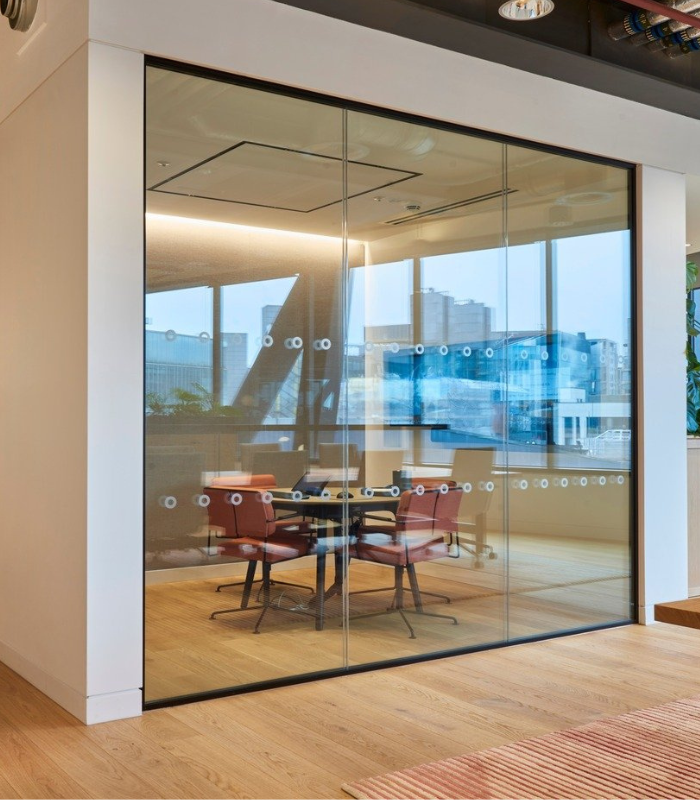
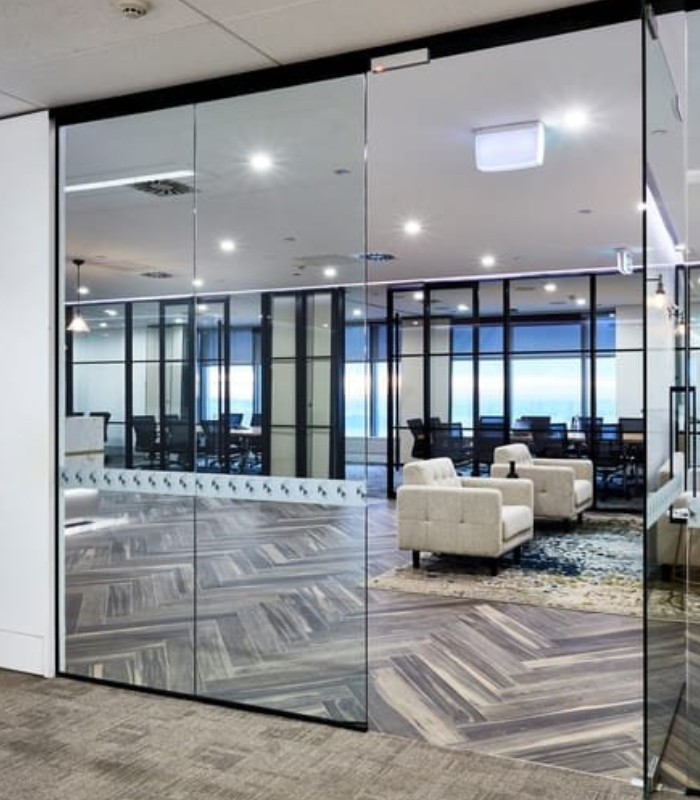
Your office design directly influences employee productivity, client perception, and operational costs. Glass office walls have emerged as a defining feature of contemporary workspace design, offering transparency and flexibility that traditional drywall simply cannot match. Modern glass partition systems create distinct work zones while maximizing natural light distribution, supporting both collaboration and focused work in ways that align with today's hybrid work environments.
Whether you're an architect planning a new build, a contractor managing an office renovation, or a facility manager adapting existing space, understanding glass office wall options helps you make informed decisions that balance aesthetics, functionality, and budget.
Quick Takeaways
• Glass office partitions cost $30-90 per square foot installed, with a typical lifespan of 15-20 years and minimal maintenance requirements • Modular demountable systems allow complete reconfiguration without demolition, protecting your investment as business needs evolve • Frameless glass walls create seamless, modern aesthetics while framed systems offer enhanced structural support and design flexibility • Natural light penetration through glass partitions reduces artificial lighting needs and improves employee well-being and productivity • Tempered and laminated safety glass options meet ANSI Z97.1 standards while providing privacy through frosted, etched, or textured finishes • Professional installation can often be completed over a single weekend, minimizing disruption to business operations
Why Glass Office Walls Are Transforming Modern Workspaces
The workplace revolution has fundamentally changed how organizations approach office design. Traditional layouts with solid walls and enclosed spaces have given way to transparent designs that maintain structure while fostering openness. Glass office partition walls address the modern need for spaces that encourage collaboration without sacrificing the ability to create focused work zones.
Businesses across industries have discovered that transparent workspace dividers significantly improve employee satisfaction and create bright, welcoming environments. The shift toward glass office divider walls reflects broader cultural changes emphasizing transparency, accessibility, and well-being in professional settings. These systems allow natural light to flow freely throughout office spaces, which research shows can boost productivity and creativity by up to 15 percent.
For architects and designers, glass office walls offer a powerful tool for creating sophisticated interiors that reflect a company's modern ethos. The visual continuity created by glass partitions makes even compact spaces feel larger and more connected, while still providing the structure needed for various work functions.
Types of Glass Office Partition Systems for Commercial Spaces
Frameless vs. Framed Glass Walls
Frameless glass partition systems deliver a minimalist aesthetic with clean lines and maximum transparency. These systems feature minimal visible hardware, creating seamless visual flow between spaces. The sleek appearance makes frameless options particularly popular in contemporary office environments where design sophistication matters. Installation requires precise measurement and specialized hardware, but the result is an elegant, uninterrupted glass surface that enhances any modern workspace.
Framed glass office partitions utilize aluminum or steel frames that provide additional structural support and design versatility. The frames can be powder-coated in various colors to complement your interior palette or match corporate branding. Framed systems often prove more cost-effective than frameless options while still delivering professional appearance and durability. For projects requiring taller partitions or specific load-bearing considerations, framed systems provide the necessary structural integrity.
Modular and Demountable Partition Options
Modular glass office partition installation represents one of the most significant advantages of contemporary glass systems. Unlike permanent construction, demountable glass walls can be installed, moved, or removed without demolition or extensive reconstruction. These systems consist of prefabricated panels and lightweight aluminum frames designed for easy reconfiguration as your business needs change.
The flexibility of demountable office partition panels proves invaluable for growing companies or organizations with evolving space requirements. You can redesign your office layout, add meeting rooms, or create new collaborative zones without the dust, disruption, and expense of traditional construction. This adaptability makes glass office divider walls a smart long-term investment that grows with your organization.
Fixed vs. Portable Office Partitions
Fixed glass partition walls provide permanent space division with maximum stability. These systems integrate directly with floor and ceiling structures, offering superior rigidity and often supporting taller configurations up to 19 feet. Fixed installations work well for conference rooms, private offices, and other spaces with stable, long-term layouts.
Portable office partitions and office partition panels offer ultimate flexibility for dynamic work environments. These freestanding systems require no ceiling attachment and can be repositioned as needed. While less common for full office buildouts, portable glass dividers serve specific needs like temporary project spaces, trade show applications, or flexible training areas.
Design Flexibility: Why Modular Glass Systems Make Financial Sense
The ability to reconfigure workspace without costly renovations delivers substantial financial benefits. When you invest in demountable glass partition systems, you're purchasing flexibility that protects against future uncertainty. Business expansion, team restructuring, or shifts to hybrid work models no longer require expensive office redesigns.
A technology company in Hoboken recently demonstrated these advantages when they installed demountable glass partition systems for their 50-person office. The project created eight flexible meeting spaces and phone booths, with complete installation accomplished over a single weekend. As the company grew and team structures evolved, they reconfigured the layout twice within 18 months without additional major investment.
The sustainability factor also contributes to long-term value. Reusable office panel systems support LEED certification efforts and align with corporate environmental goals. Rather than generating construction waste with each layout change, you simply reposition existing panels. This approach reduces both environmental impact and ongoing costs compared to traditional build-outs.
Glass Office Walls Cost Considerations
Understanding the investment required for glass office partition installation helps you plan budgets effectively. Typical costs range from $30 to $90 per square foot installed, though specific projects may fall outside this range based on customization and complexity.
Several factors influence final pricing. Glass type significantly affects cost, with standard tempered glass representing the most economical option while specialized finishes like frosted or etched surfaces command premium pricing. System height also impacts budget, as taller partitions require more material and may need additional structural support. The choice between framed and frameless systems, door configurations, and hardware quality all contribute to total project costs.
While glass office walls require higher initial investment than basic drywall construction, the long-term value proposition changes the calculation. Glass partitions typically last 15 to 20 years with minimal maintenance beyond routine cleaning. The flexibility to reconfigure without replacement, energy savings from natural light distribution, and positive impact on employee satisfaction all contribute to favorable return on investment.
For a typical 100-square-meter office space, total costs might range from $4,500 to $10,400 before considering site-specific factors. Getting detailed quotes from experienced commercial glazing solutions providers ensures accurate budgeting for your specific requirements.
How Do Glass Partitions Compare to Traditional Drywall?
The comparison between glass office partition walls and traditional drywall construction reveals distinct advantages for glass systems in modern work environments. Natural light transmission stands as perhaps the most significant benefit. Glass allows daylight to penetrate deep into office spaces, reducing reliance on artificial lighting and creating brighter, more inviting work areas. This light distribution can reduce energy costs while improving employee mood and alertness.
Installation speed gives glass systems another edge. While drywall construction involves framing, hanging panels, taping, mudding, sanding, and painting over multiple days, glass partition installation can often be completed in a fraction of the time with far less mess. Many projects finish over a single weekend, allowing normal business operations to continue with minimal disruption.
The flexibility factor proves particularly valuable in today's dynamic business environment. Modifying drywall layouts requires demolition, disposal, and complete reconstruction. Glass systems, particularly demountable options, can be reconfigured or relocated without generating waste or requiring extensive labor. For businesses in leased spaces, this portability means you can take your investment with you when relocating.
Energy efficiency extends beyond lighting savings. Glass office dividers allow HVAC systems to distribute conditioned air more effectively throughout open floor plans, reducing temperature variations between different zones. The transparency eliminates the enclosed pockets that often become uncomfortably hot or cold in traditional layouts.
What Glass Thickness and Safety Standards Apply to Office Partitions?
Architects and contractors need to specify appropriate glass thickness and safety ratings for professional glass partition installation services. Commercial interior glass partitions typically use glass ranging from 3/8 inch to 1/2 inch thick, with thicker glass providing enhanced durability and a more substantial feel.
Safety considerations require using tempered and laminated safety glass options that meet ANSI Z97.1 standards for safety glazing. Tempered glass undergoes a heat treatment process that makes it approximately four times stronger than standard annealed glass. When broken, it fractures into small, relatively harmless pieces rather than dangerous shards, meeting safety requirements for commercial applications.
Laminated glass consists of two glass layers bonded with an interlayer, typically polyvinyl butyral. This construction provides additional safety because the interlayer holds glass fragments in place if breakage occurs. Laminated options work particularly well in high-traffic areas or applications where enhanced security matters.
The choice between tempered and laminated glass depends on specific project requirements. For standard office glass partition walls, tempered glass provides excellent safety performance at economical pricing. Projects requiring enhanced security, specialized privacy features, or specific performance characteristics may benefit from laminated glass construction.
Can Glass Office Walls Provide Adequate Privacy?
Privacy concerns often arise when organizations consider transitioning from solid walls to glass office divider walls. Fortunately, numerous options exist for creating private spaces without sacrificing the benefits of glass partitions.
Frosted glass represents the most popular privacy solution, available in various opacity levels. Acid-etched finishes create permanent frosting with a smooth, sophisticated appearance. Film applications offer more economical alternatives while still obscuring visibility. You can apply frosting to the full panel or create privacy bands at seated eye level while maintaining transparency above and below.
Textured glass adds privacy through pattern rather than opacity. Reeded, fluted, or other decorative textures scatter light and obscure direct sightlines while maintaining a sense of openness. These options work particularly well when you want privacy without the closed-in feeling of fully frosted surfaces.
Strategic placement maximizes privacy where needed. A law firm in Paramus successfully balanced privacy requirements with open design by using frosted glass at seated heights with clear glass above. This approach maintained daylight penetration throughout the office while ensuring confidentiality for client meetings. Conference rooms and private offices received full-height frosted glass, while collaborative areas used clear glass to encourage interaction.
Color tinting offers another privacy option, with bronze, gray, or other tinted glass reducing visibility while adding design interest. The level of tinting can be adjusted based on specific privacy requirements and aesthetic preferences.
How Quickly Can Glass Partition Systems Be Installed?
Installation timeline significantly impacts project planning, particularly for occupied buildings where minimizing disruption remains critical. Glass office partition installation typically proceeds much faster than traditional construction, with many projects completing in remarkably short timeframes.
Modular systems using prefabricated components allow for rapid installation. Manufacturers custom-fabricate panels and frames based on precise site measurements, ensuring components arrive ready for assembly. Professional installers can typically complete a standard office partition project within 10 to 15 business days from final measurements to completion.
For businesses that cannot afford operational downtime, weekend installations provide an ideal solution. The technology startup mentioned earlier had their entire glass partition system installed over a single weekend, allowing normal business operations Monday morning with eight new meeting spaces ready for use. This approach requires careful planning and coordination but delivers tremendous value in maintaining business continuity.
Site preparation requirements remain minimal compared to traditional construction. Glass systems don't require the extensive framing, electrical work, or finishing steps of drywall construction. The cleaner installation process means less dust, reduced noise, and minimal impact on adjacent work areas during installation.
Demountable systems offer additional speed advantages for future modifications. When layout changes become necessary, reconfiguration happens in days rather than weeks. Panels can be repositioned, doors relocated, and spaces redefined without the demolition and reconstruction timeline of permanent walls.
Do Glass Office Partitions Improve Energy Efficiency?
The energy efficiency benefits of glass office walls extend beyond the obvious reduction in artificial lighting needs. Natural light penetration throughout office spaces can significantly decrease reliance on electric lighting, particularly in areas that would otherwise require illumination throughout business hours. This reduction in lighting load translates directly to lower energy costs and reduced HVAC demands, since lighting generates substantial heat.
The open design created by transparent office glass partition walls allows more effective distribution of heating and cooling throughout floor plans. Conditioned air flows more freely without the barriers created by solid walls, reducing the temperature variations that often plague traditional office layouts. This improved circulation means HVAC systems work more efficiently, maintaining comfortable conditions with less energy expenditure.
For organizations pursuing LEED certification or other sustainability goals, glass partition systems contribute valuable points. The recyclability of glass and aluminum materials, combined with the reusability of demountable systems, aligns with circular economy principles. Rather than generating construction waste with each layout modification, you're investing in permanent materials that adapt to changing needs.
The transparency factor also encourages more mindful energy use. When occupants can see throughout the space, awareness of lighting and climate control increases. Employees are more likely to switch off lights in unoccupied meeting rooms when visibility makes energy waste obvious.
Natural light exposure provides additional health and productivity benefits that, while harder to quantify than utility costs, contribute to overall workplace value. Employees with access to natural light report better sleep quality, mood, and job satisfaction. These wellness benefits reduce absenteeism and improve performance, delivering returns that extend beyond direct energy savings.
Conclusion
Glass office walls represent more than an aesthetic choice—they're a strategic investment in workplace flexibility, employee well-being, and operational efficiency. From frameless systems that create seamless modern environments to modular partitions that adapt as your business grows, today's glass office partition options deliver solutions for virtually any commercial space requirement.
The combination of natural light distribution, installation flexibility, and long-term value makes glass partitions an increasingly practical choice for offices throughout North Jersey. Whether you're planning new construction or renovating existing space, understanding the types, costs, and benefits of glass office divider walls helps you make decisions that serve both immediate needs and future growth.
Ready to explore glass office partition options for your commercial space? Call Delta Glass NJ at (201) 214-3779 for expert consultation on energy-efficient glass solutions, email deltaglassestimates@gmail.com for project quotes, or request a free consultation to discuss how glass partition systems can transform your workspace.
Frequently Askes Questions
-
Glass office walls are transparent or frosted partitions used to divide office spaces while maintaining an open and modern look. They provide privacy, sound reduction, and aesthetic appeal.
-
Yes, glass walls are perfect for office rooms. They create a modern, professional atmosphere while offering options for privacy with frosted or tinted glass.
-
Yes, acoustic glass dividers can reduce noise while maintaining an open office feel. Laminated or double-glazed glass options provide better soundproofing.
What Sets Our Process Apart:
Initial consultation and requirements analysis
Technical specification review
Project timeline development
Professional installation
Quality assurance inspection
Post-installation support