
Frameless Glass Partitions for New Jersey Offices
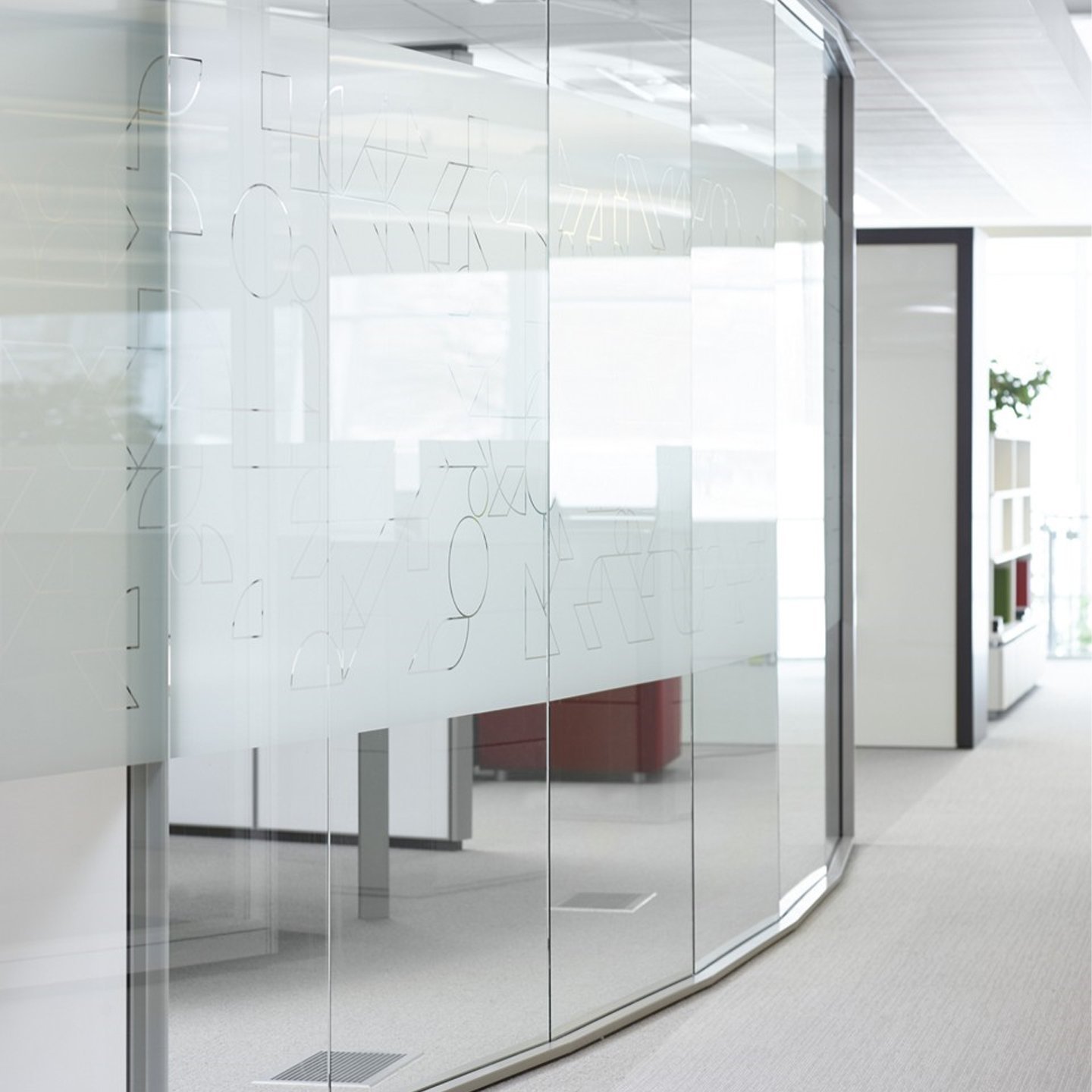
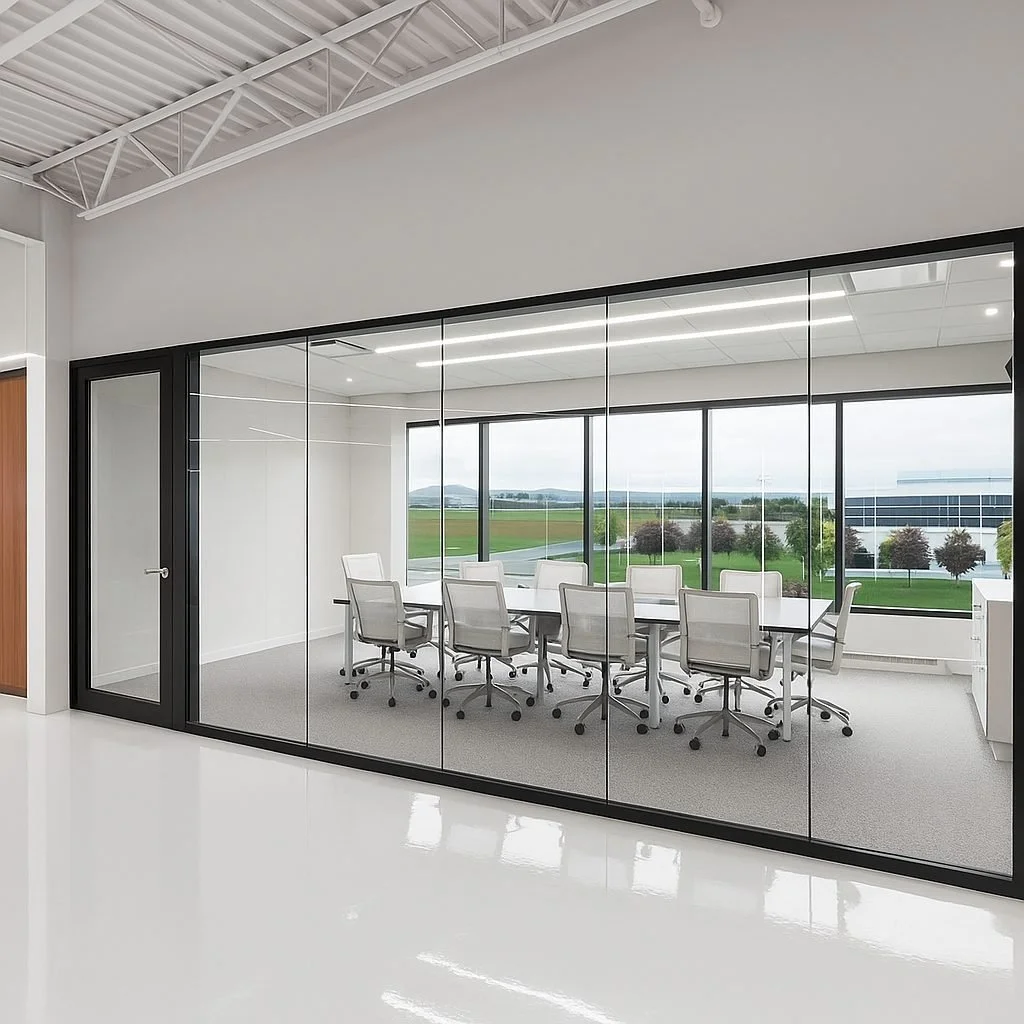
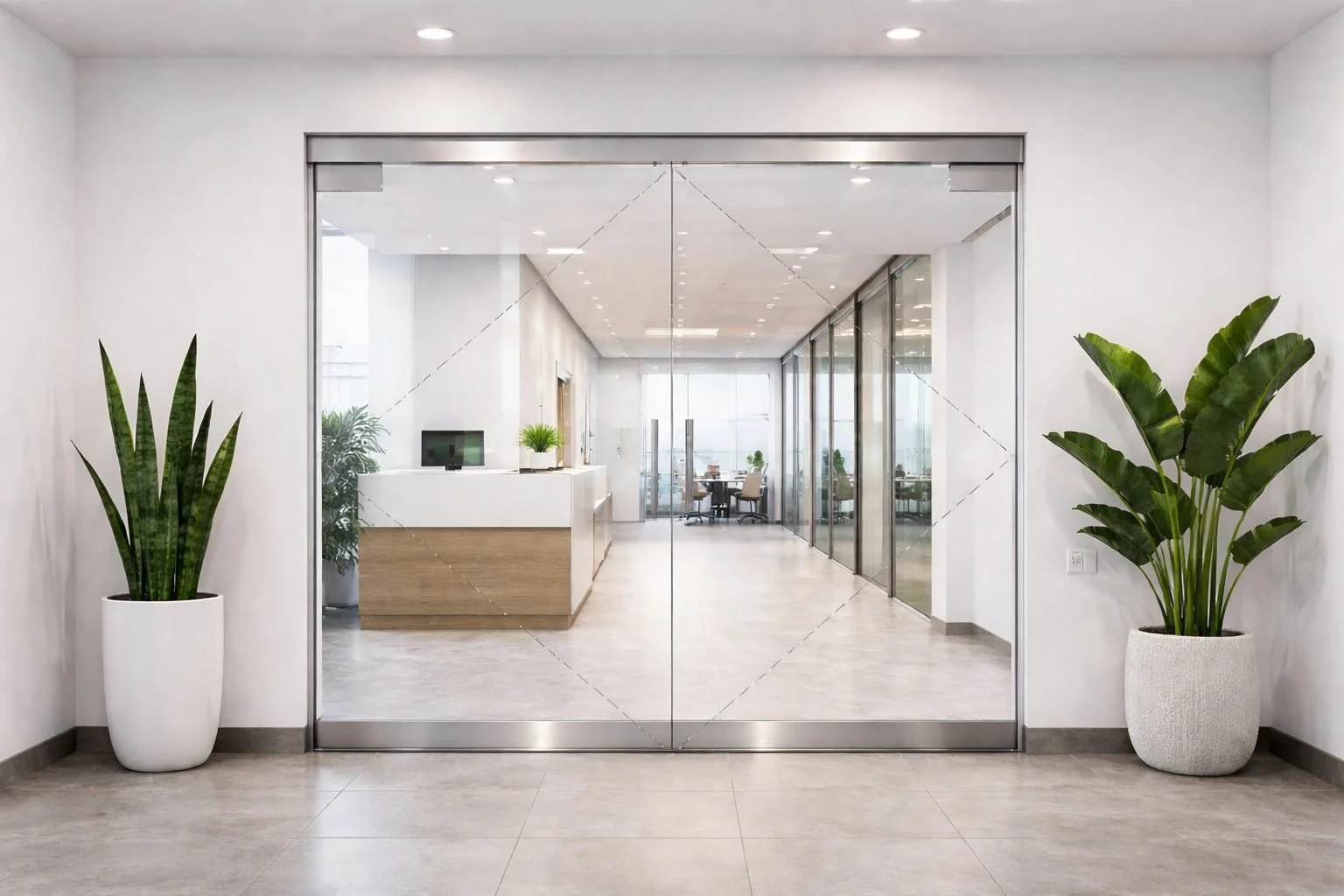
Frameless glass partitions divide an office without making the space feel smaller. They are often used for conference rooms, private offices, reception areas, and meeting rooms where daylight, visibility, and a clean interior layout matter.
The right system depends on more than appearance. Floor level, ceiling support, glass thickness, door hardware, privacy needs, and sound control all affect the final design. Delta Glass NJ installs office glass partition systems for businesses across North Jersey, including Hudson, Bergen, Essex, and Passaic counties.
If you are planning an office buildout or renovation, this guide explains when frameless glass works well, when another system may be better, and what to review before ordering custom glass.
What Is a Frameless Glass Partition System?
A frameless glass partition is an interior wall system that uses glass panels as the main visual structure. Instead of heavy vertical framing between each panel, the glass is usually held in place with discreet hardware such as U-channel, clamps, patch fittings, or floor and ceiling anchors.
Most commercial office systems use tempered safety glass. Common thicknesses include 3/8 inch and 1/2 inch, depending on the layout, panel size, height, and door configuration.
A frameless system can include fixed glass panels, hinged glass doors, sliding doors, sidelites, or full conference room enclosures. The goal is to separate work areas while keeping the space bright and connected.
Where Frameless Glass Works Best
Conference rooms
Frameless glass is a strong choice for conference rooms because it keeps the room visible from the main office while still creating a defined meeting space.
For offices that need better sound control, laminated glass and proper door seals should be discussed early. Standard glass can reduce some noise transfer, but it should not be sold as a fully soundproof wall.
Private offices
Glass private offices work well for managers, executives, law firms, real estate offices, and professional service businesses that want privacy without closing off the floor plan.
Frosted film, patterned glass, or partial privacy bands can help create visual separation while still allowing light to pass through.
Reception areas
A glass partition near reception can separate waiting areas from staff workspaces without making the entrance feel tight. This is useful in medical offices, financial offices, showrooms, and tenant spaces with limited square footage.
Tight office layouts
In Jersey City, Hoboken, Newark, Fort Lee, and other North Jersey markets, many offices have limited floor space or older building conditions. Glass partitions can help divide work areas without the heavy feel of new drywall.
Frameless vs Framed vs Sliding Glass Partitions
Frameless glass is usually chosen for its clean look and open sightlines. It works best when the floor, walls, and ceiling can support accurate installation.
Framed glass partitions may be a better fit for longer runs, larger office layouts, or spaces where extra structural support is needed. They also make sense when the ceiling condition is not ideal for a fully frameless installation.
Sliding glass systems are useful when there is not enough swing clearance for a hinged door. A sliding glass door can help preserve usable floor space in small offices, narrow corridors, and meeting rooms.
The best choice depends on the building, not just the design preference.
Glass and Privacy Options
Clear tempered glass is the standard choice for many office partitions. It gives the most open look and allows light to travel through the space.
Low iron glass is often used when the client wants extra clarity and less green tint along the glass edge.
Laminated glass is a better option when sound control is a priority. It includes an interlayer that helps reduce noise transfer compared with standard monolithic glass.
Frosted film, etched patterns, or privacy bands can be added when a space needs visual privacy. This is common for HR offices, medical consultation rooms, conference rooms, and executive offices.
Hardware finishes also affect the final look. Common choices include brushed aluminum, polished chrome, matte black, and other finishes depending on the office design.
What Affects the Cost of Frameless Glass Partitions?
Frameless glass partitions are custom measured and fabricated, so the cost depends on the project details.
The biggest cost factors include:
Glass thickness and glass type
Clear tempered glass is usually the baseline. Low iron glass, laminated glass, and specialty privacy glass increase material cost.
Number and size of panels
Large panels, tall openings, and custom cuts require more glass, more labor, and more careful handling.
Door type
Hinged glass doors, sliding glass doors, double doors, and soft-close hardware all change the final price.
Hardware finish
Standard U-channel is usually more cost-effective than specialty patch fittings, matte black hardware, ladder pulls, or hydraulic hinges.
Site conditions
Uneven floors, out-of-plumb walls, concrete drilling, ceiling blocking, and coordination with other trades can all affect labor.
Privacy or acoustic upgrades
Frosted film, laminated glass, acoustic seals, and tighter door details add cost but may be worth it for meeting rooms or confidential spaces.
A proper quote should come after field measurements, not just from a rough photo.
Installation Planning for North Jersey Office Spaces
Frameless glass needs accurate site conditions. Small issues in the building can become visible once large glass panels are installed.
Check the floor level
Older commercial buildings often have floors that are not perfectly level. If the base channel is not set correctly, the glass seams may not line up and the doors may not close properly.
Review the ceiling structure
A glass partition that reaches the ceiling needs a secure anchoring point. A standard drop ceiling grid is not designed to carry the weight of a glass wall or door. Blocking or another support detail may be needed above the ceiling.
Confirm finished openings
Glass is fabricated to exact sizes. Final measurements should be taken after finished flooring, wall surfaces, and ceiling conditions are ready. Measuring too early can lead to fit issues.
Plan around office operations
Many office projects need to be scheduled around business hours, tenant rules, elevator access, parking, building insurance requirements, and general contractor timelines. These details should be discussed before fabrication begins.
What to Expect During a Delta Glass NJ Project
A typical frameless office partition project starts with a site visit. Delta Glass NJ reviews the opening, checks floor and wall conditions, discusses glass options, and confirms the door layout.
After measurements are approved, the glass is fabricated to the project dimensions. Fabrication time depends on glass type, hardware, and supplier availability.
During installation, the team sets the channels or hardware, places the glass panels, installs the doors, adjusts the operation, seals the joints, and cleans the finished system.
Most smaller office installations can be completed with limited disruption once the glass is ready, but every project should be scheduled around site access and building requirements.
What Can Go Wrong If the System Is Not Planned Correctly?
A frameless glass partition should look simple when it is finished, but the installation has to be precise.
Common problems include:
Doors that rub, drift, or do not close evenly
Panel seams that do not line up
Visible gaps that reduce privacy
Glass ordered before the space is ready
Hardware that does not match the building conditions
Weak ceiling support above a drop ceiling
Sound expectations that do not match the selected glass
Most of these issues can be avoided with accurate measurements, clear hardware planning, and a realistic conversation about privacy and sound control before the order is placed.
Is Frameless Glass Right for Your Office?
Frameless glass is a good fit if you want an open office feel, more daylight, a clean conference room enclosure, or a more polished client-facing space.
You may want to consider a framed or partially framed system if the layout is very large, the ceiling support is limited, the space needs stronger acoustic control, or the budget is better suited to a simpler system.
The best answer comes from reviewing the actual office conditions. Photos help, but an on-site measurement is usually needed before a final recommendation.
FAQs About Frameless Glass Partitions
Are frameless glass partitions soundproof?
No. Standard frameless glass partitions are not fully soundproof. They can reduce some noise transfer, but confidential rooms usually need laminated glass, better door seals, and careful detailing around gaps.
What glass thickness is best for office partitions?
Many office partitions use 3/8 inch or 1/2 inch tempered glass. The right thickness depends on the height, panel width, door type, and hardware design.
Can frameless glass be installed with a drop ceiling?
Sometimes, but the drop ceiling grid itself usually cannot support the system. The installer may need blocking or a secure structural point above the ceiling.
Can we add privacy without blocking all the light?
Yes. Frosted film, etched patterns, privacy bands, and laminated glass can add visual privacy while still letting light move through the office.
How long does installation take?
The installation time depends on the number of panels, doors, and site conditions. Many projects require fabrication time after field measurements, then installation is scheduled once the glass and hardware are ready.
Is frameless glass safe for commercial offices?
When properly specified and installed, tempered or laminated safety glass is commonly used for commercial interior partitions. The system should be designed around the opening, hardware, traffic level, and applicable building requirements.
Do we need to close the office during installation?
Not always. Some projects can be installed with limited interruption, but the work area needs to be clear and safe. Scheduling can often be coordinated around business hours or building access rules.
Does Delta Glass NJ install frameless glass partitions near me?
Delta Glass NJ serves commercial clients across North Jersey, including many offices in Hudson, Bergen, Essex, and Passaic counties. Contact the team to confirm your location and schedule a site visit.
Talk With Delta Glass NJ About Your Office Layout
A frameless glass partition should be planned around the real conditions in your office, not a generic template.
Call Delta Glass NJ at (201) 849-7016 or request a consultation online to review your layout, glass options, privacy needs, and installation timeline.
